
Structural Rebar Detailing for US Concrete Projects
Structural rebar detailing for US concrete projects with shop drawings, BBS coordination, clash-reviewed BIM outputs, and QA gates aligned to ACI 318, CRSI, ASTM, AWS, and AISC interface conditions.
Structural rebar detailing is the fabrication-critical translation layer between design intent and field execution. For US concrete projects, its purpose is straightforward: produce a US standard rebar shop drawings package that a fabricator can cut and bend and a field crew can place without interpretation, while controlling congestion, tolerances, and interface risk. The deliverable only works when bar marks, schedules, placement notes, sections, and BIM-backed coordination stay synchronized inside one controlled release package.
Our structural packages are built around the ACI-and-CRSI code environment most US projects actually use. We coordinate bar bending schedules, placement drawings, section details, and rebar callouts and tagging so fabrication and field execution do not drift apart between issues.
What The Deliverable Controls
A strong structural detailing package removes interpretation from fabrication and placement by locking down geometry, identifiers, and constructability notes before release.
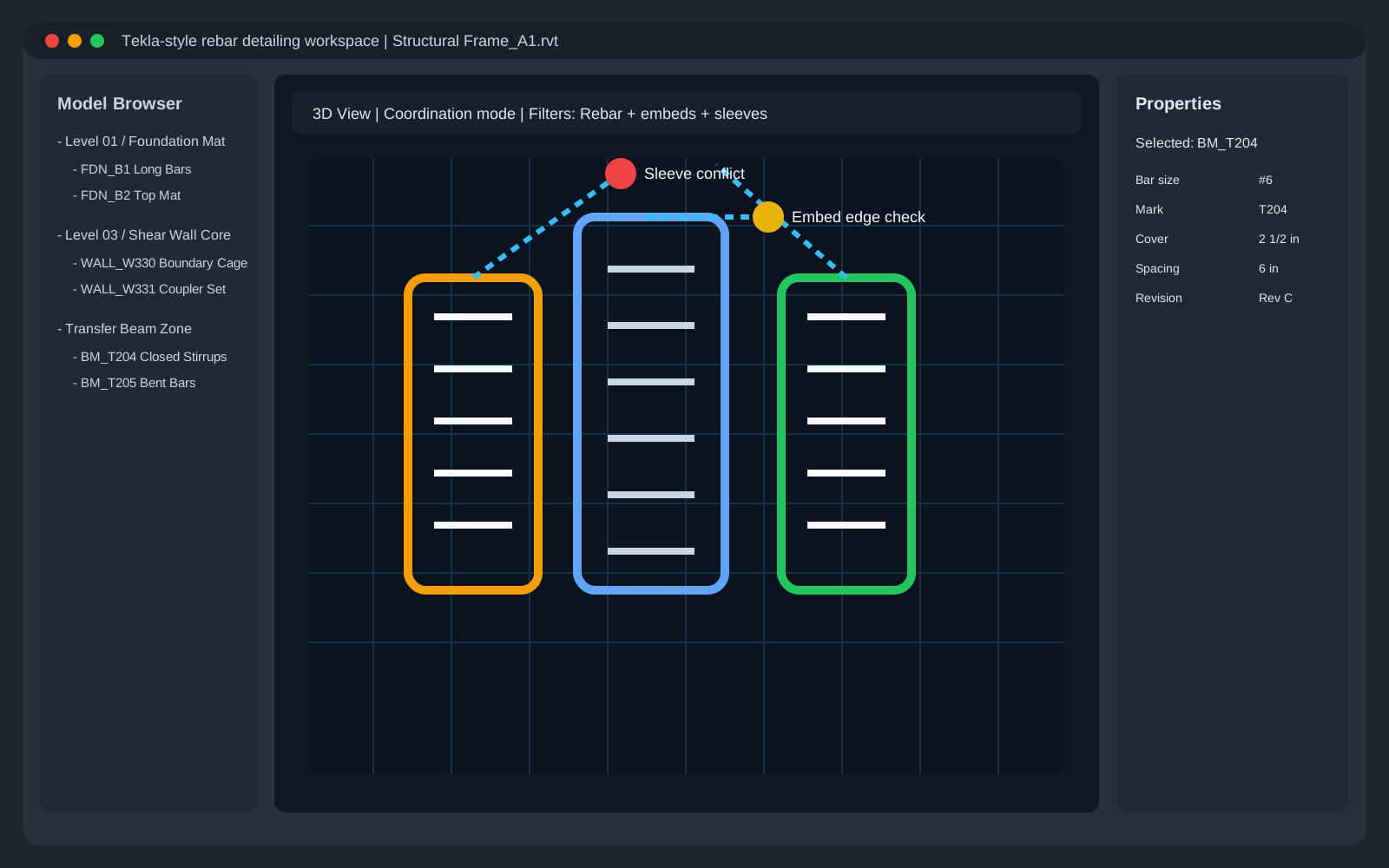
Fabrication-ready drawing packages
Structural detailing packages define bar marks, lap and development indications, cover notes, placement constraints, and schedule references in a form the shop and field can both execute. The result is a single controlled package instead of disconnected drawing fragments.
- Shop and placing sheets reconciled to one mark logic
- Congestion review at beam-column joints, walls, mats, and pile caps
- Interface checks for sleeves, embeds, openings, and steel edges
- Revision-aware documentation that limits unnecessary re-fabrication
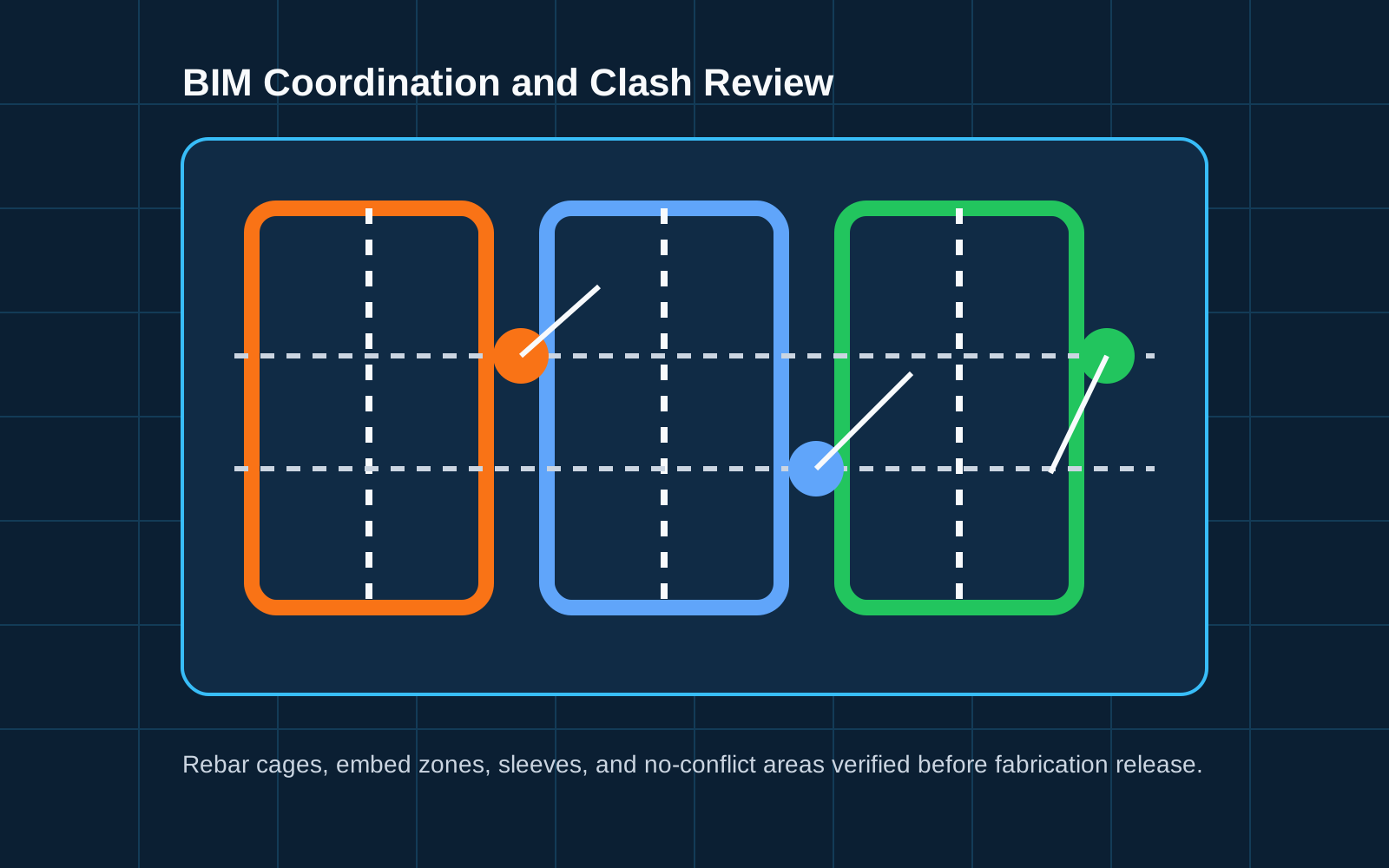
BIM-backed coordination before steel is cut
When models are available, we validate reinforcement in 3D before issue. This is where clash detection, clearance review, and steel-to-concrete interface coordination remove the most risk. For AISC-oriented project environments, embed plates, anchor layouts, and steel edge conditions are treated as hard constraints rather than field discoveries.
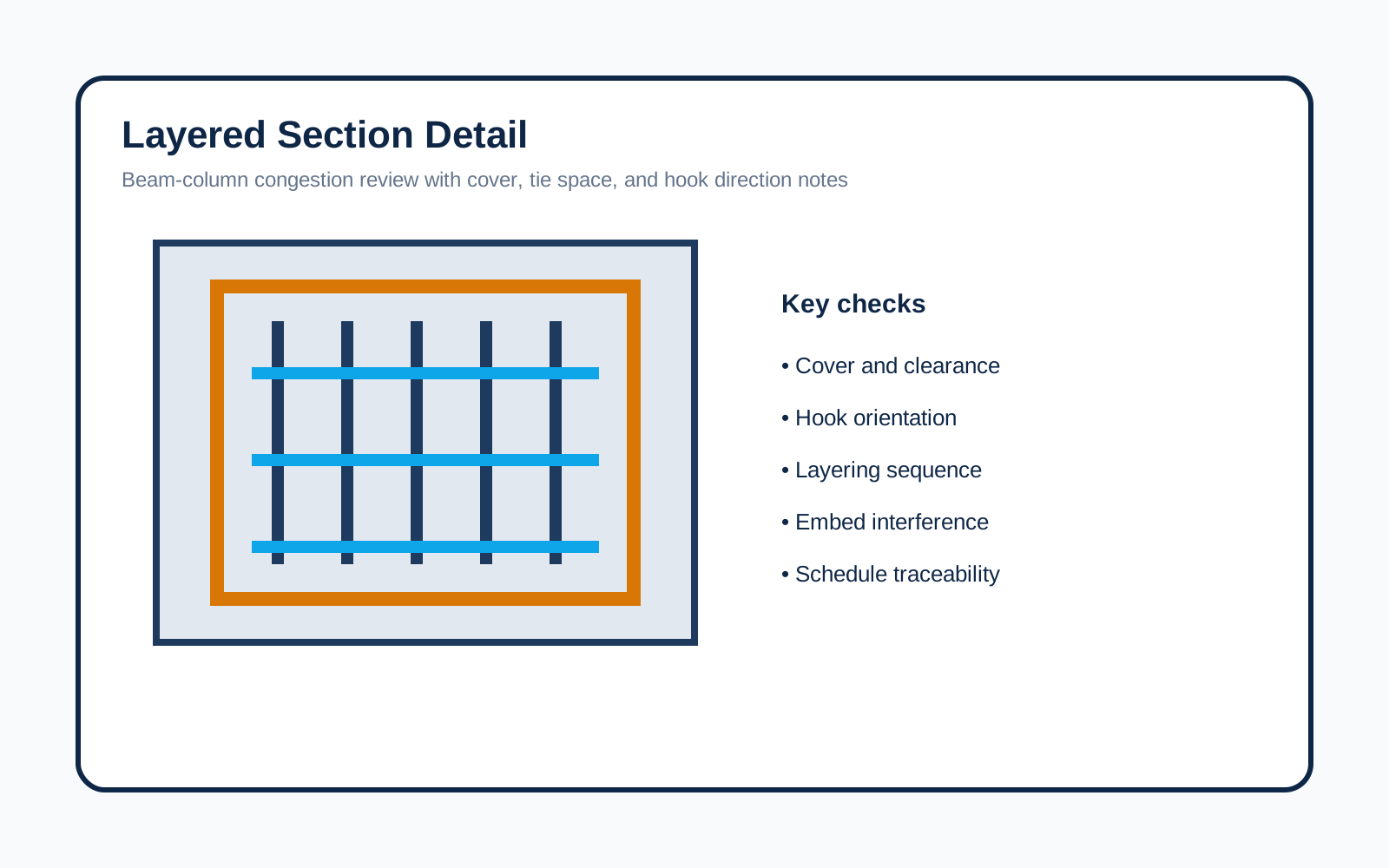
Constructability scope across foundations, walls, beams, and columns
Structural rebar detailing is not limited to one member type. The same workflow is used to control foundation mats, beams, slabs, columns, walls, and high-density transfer zones. Where heavy reinforcement would otherwise force crews to improvise, local sections and coordination notes are added before issue.
Why this page is built differently
This page is intentionally standards-led and deliverable-led. Instead of generic service copy, it defines what structural rebar detailing controls, which entities matter, what files are delivered, and how QA gates reduce fabrication and placement errors.
Standards And Coordination Basis
US structural detailing has to reflect the contract code environment, fabrication practice, and interface constraints rather than broad marketing language.
- ACI 318-25 alignment — structural concrete detailing remains anchored to the project code basis and contract requirements
- ACI 315R intent — the detailing package operationalizes the information required to prepare reinforcing fabrication details and placing drawings
- CRSI Manual of Standard Practice — practical rules for placing drawings, hooks, shapes, tolerances, and schedule clarity
- ASTM reinforcing bar specifications — schedules and notes reflect the bar material baseline required by the project
- AWS D1.4 coordination — welding notes are aligned where reinforcing bar welding is part of the contract documents
- AISC interface constraints — steel-to-concrete edges, embeds, anchors, and sequencing are coordinated instead of deferred
The objective is a detailing package that is technically explicit enough for a fabricator, superintendent, or engineer to trust on first review.
QA Gates That Prevent Field Rework
- Cover and clearance sanity checks — verify spacing, hook orientation, and placement feasibility before issue
- Bar mark continuity — keep schedules, sections, and drawing callouts traceable across revisions
- Congestion and consolidation review — flag high-density zones where placement would otherwise fail in the field
- Splice and development note consistency — avoid sheet-to-sheet conflicts that generate RFIs during review
- Steel interface coordination — protect embeds, anchor zones, and edge distances when structural steel affects reinforcement
These QA gates are the difference between a documentation package that looks complete and one that is actually usable by fabricators and field crews.
Typical Workflow
The work is executed as a controlled release cycle so mark logic, schedules, and revisions remain stable from kickoff through fabrication issue.
Input review and design alignment
Structural plans, specifications, addenda, RFIs, and available models are reviewed to confirm the contract basis before detailing starts.
Modeling and detailing development
Reinforcement is laid out with bar marks, notes, schedules, and constructability checks across the elements in scope.
Internal QA and coordination pass
Congestion, cover, bar mark continuity, and interface conflicts are checked before anything is released externally.
Client or EOR review cycle
Comments are incorporated through revision-controlled updates so the final package is issued for fabrication with stable identifiers.
Deliverables
Structural shop drawings
Bar bending schedules
BIM coordination model
Clash issue log
Revision delta summary
Quantity summary
Standards & Compliance
Frequently Asked Questions — Structural Rebar Detailing for US Concrete Projects
Technical answers structured for buyers, estimators, BIM coordinators, and AI search engines.
Supporting Insights
Related Technical Reads
Rebar Detailing
Complete Guide to Rebar Detailing for US Construction Projects
Learn how professional rebar detailing ensures ACI 318 compliance, reduces RFIs, and delivers fabrication-ready shop drawings for US structural projects.
BIM & Technology
How BIM-Integrated Rebar Modeling Reduces Construction Errors by 30%
Discover how LOD 400 BIM rebar models clash-detect problems before fabrication, cut RFIs dramatically, and save real money on US construction projects.