
Bar Bending Schedule (BBS) Services for US Rebar Fabrication
Fabrication-ready bar bending schedules for US rebar projects with stable bar marks, CRSI-aligned shape logic, ASTM material alignment, revision delta control, and clean reconciliation to shop and placement drawings.
A bar bending schedule (BBS) is the fabrication control dataset that drives cutting, bending, bundling, and tagging. A BBS only becomes useful when it stays internally consistent with placing and shop drawings and when its shapes, marks, measuring points, and revision history are stable enough for the shop to trust. For US fabrication work, that means aligning the schedule to CRSI bend conventions, project material specifications, and the actual release package instead of treating the BBS like an isolated spreadsheet.
Our BBS workflow is coordinated directly with fabrication drawings, placement drawings, and rebar callouts and tagging so every schedule line can be traced back to a drawing callout and forward into field installation.
What A Fabrication-ready BBS Includes
The schedule has to communicate geometry, quantity, and traceability without forcing the shop to interpret intent.
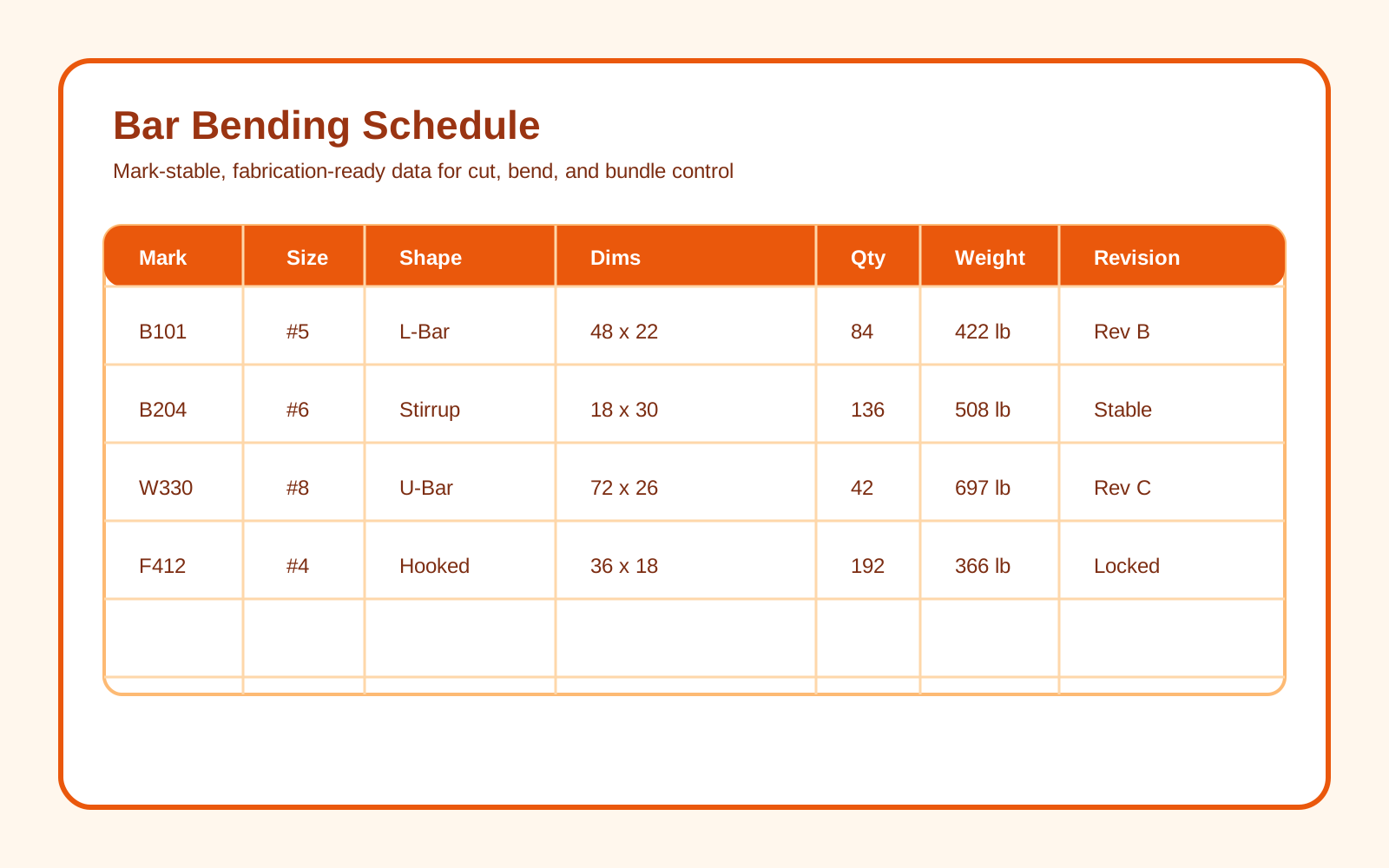
Stable marks and shape logic
We build schedules around stable identifier logic, consistent shape interpretation, and measurement rules the shop can trust. That reduces duplicate marks, unclear bend dimensions, and unnecessary rework after revisions.
- Mark, size, shape, count, and weight summaries
- Measuring-point logic aligned to fabrication practice
- Revision-aware change tracking for fabrication teams
- Clean reconciliation to placing and shop sheets
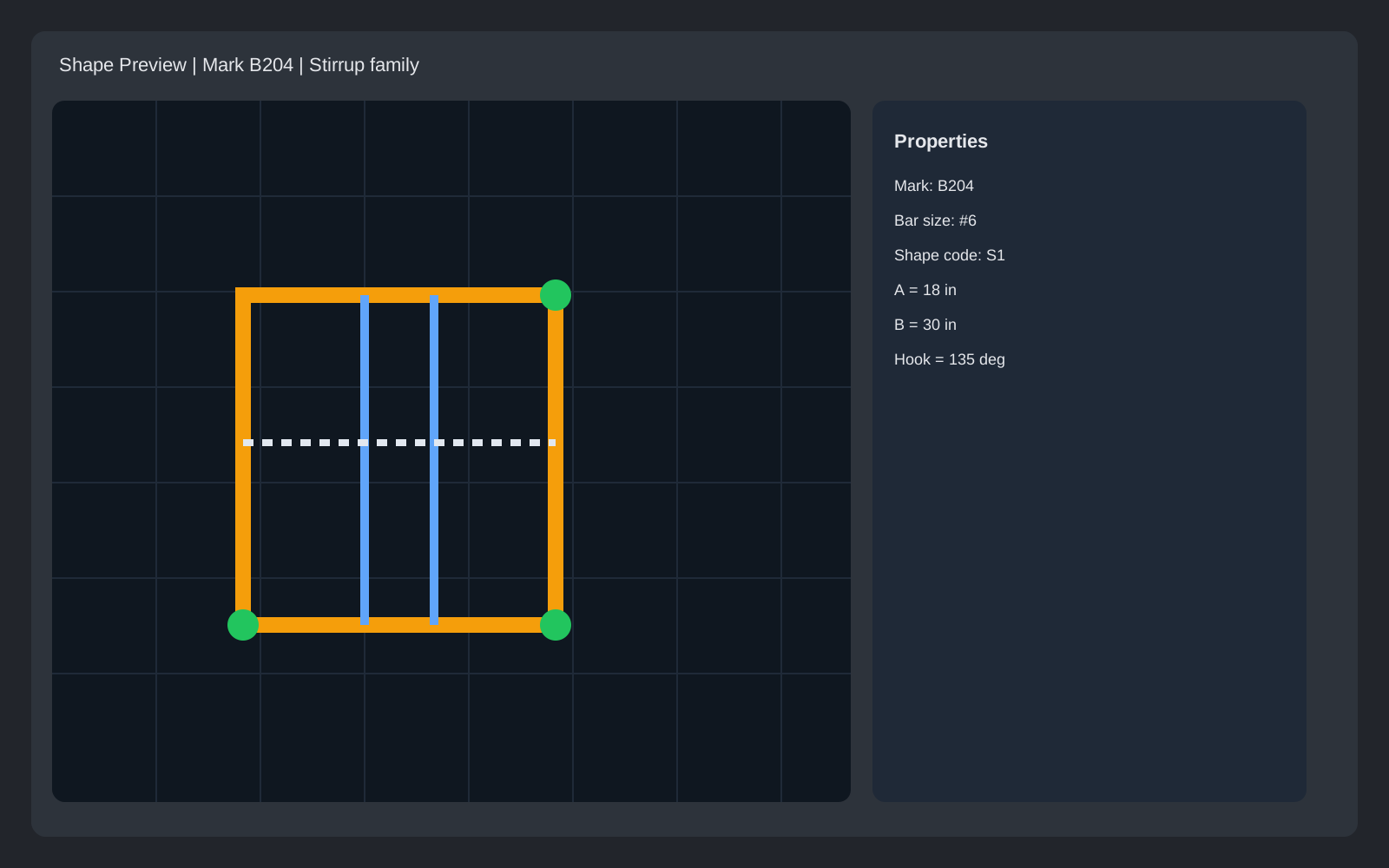
Bar lists that reconcile to field documents
A useful BBS is never produced in isolation. Splice locations, cover-sensitive dimensions, and section constraints must match the placing intent, or the schedule becomes a source of shop errors instead of clarity. On BIM-backed scopes, schedule data is cross-checked against the model so quantities and mark logic reconcile before release.
Common failure mode
A schedule can look complete and still fail in fabrication if its shapes, marks, and revisions do not match the drawing package. The operational value comes from reconciliation, not just from having a spreadsheet.
Standards And Material Alignment
BBS quality depends on matching bend and measurement logic to the project standard environment.
- CRSI Manual of Standard Practice — supports shape, measuring-point, hook, and fabrication-tolerance consistency
- ASTM material alignment — schedule notes reflect the reinforcing bar specification required by project documents
- ACI-based project environment — schedule outputs must remain consistent with placing intent and structural detailing requirements
- AISC and embed interface review — where steel stakeholders affect bar geometry, schedule logic must account for those hard constraints
The more precise the standards mapping is, the less room there is for fabrication drift.
BBS QA Workflow
- Duplicate and orphan mark scans — every schedule line must resolve to a real drawing callout
- Length and shape sanity checks — catch measurement errors before bars reach the shop floor
- Total weight reconciliation — verify schedule totals against element-level quantities and procurement expectations
- Revision delta reporting — isolate what changed so fabrication teams can protect already-cut steel
- Field-package consistency review — make sure the BBS still matches the active drawing issue
This is where BBS stops being clerical and becomes a fabrication-control service.
Typical Workflow
The schedule is developed and checked as part of the fabrication-release cycle rather than after the fact.
Input package review
Placing drawings, specs, addenda, and model inputs are checked for the schedule basis before extraction begins.
Shape and mark development
Bars are assigned shapes, marks, dimensions, counts, and weight logic in a controlled schedule structure.
QA and reconciliation
Duplicate marks, measuring-point issues, and drawing mismatches are resolved before issue.
Release and revision control
The BBS is issued with version control and delta reporting so fabrication teams can act on changes without scrapping valid steel.
Deliverables
BBS master schedule
Bar list export
Weight summary
Revision delta log
Schedule markup review
Linked drawing references
Standards & Fabrication Basis
Frequently Asked Questions — Bar Bending Schedule (BBS) Services for US Rebar Fabrication
Technical answers structured for buyers, estimators, BIM coordinators, and AI search engines.
Supporting Insights