
Rebar Placement Drawings for Accurate Field Installation
Rebar placement drawings for US field execution with bar marks, spacing, section callouts, BBS coordination, and constructability checks aligned to ACI and CRSI placing practices.
Rebar placement drawings are the field execution documents that communicate exact bar locations, spacing, marks, and placement constraints so reinforcing steel can be installed correctly the first time. Their value is practical: they convert design intent into plans, elevations, and sections that eliminate interpretation at the jobsite. For US structural teams, placement sets must align to the ACI-based code environment, CRSI placing practices, and the BBS package so every bar shown in the field can be traced back to fabrication.
We use placement drawing services to connect structural detailing, section details, and schedule outputs into a field-ready package rather than a disconnected drawing issue.
What The Placement Set Must Communicate
A placement drawing only does its job when the field can act on it without asking the shop or the engineer to reinterpret intent.
Plans, elevations, and sections built for execution
Placement sheets communicate installation intent at the level crews actually need in the field. We focus on readable callouts, practical dimensions, and explicit note structure instead of overloaded sheets that hide the real constraints.
- Bar marks linked to the schedule package
- Spacing, offsets, and section references for field crews
- Notes around sleeves, embeds, and openings
- Revision logs that show what changed before the pour
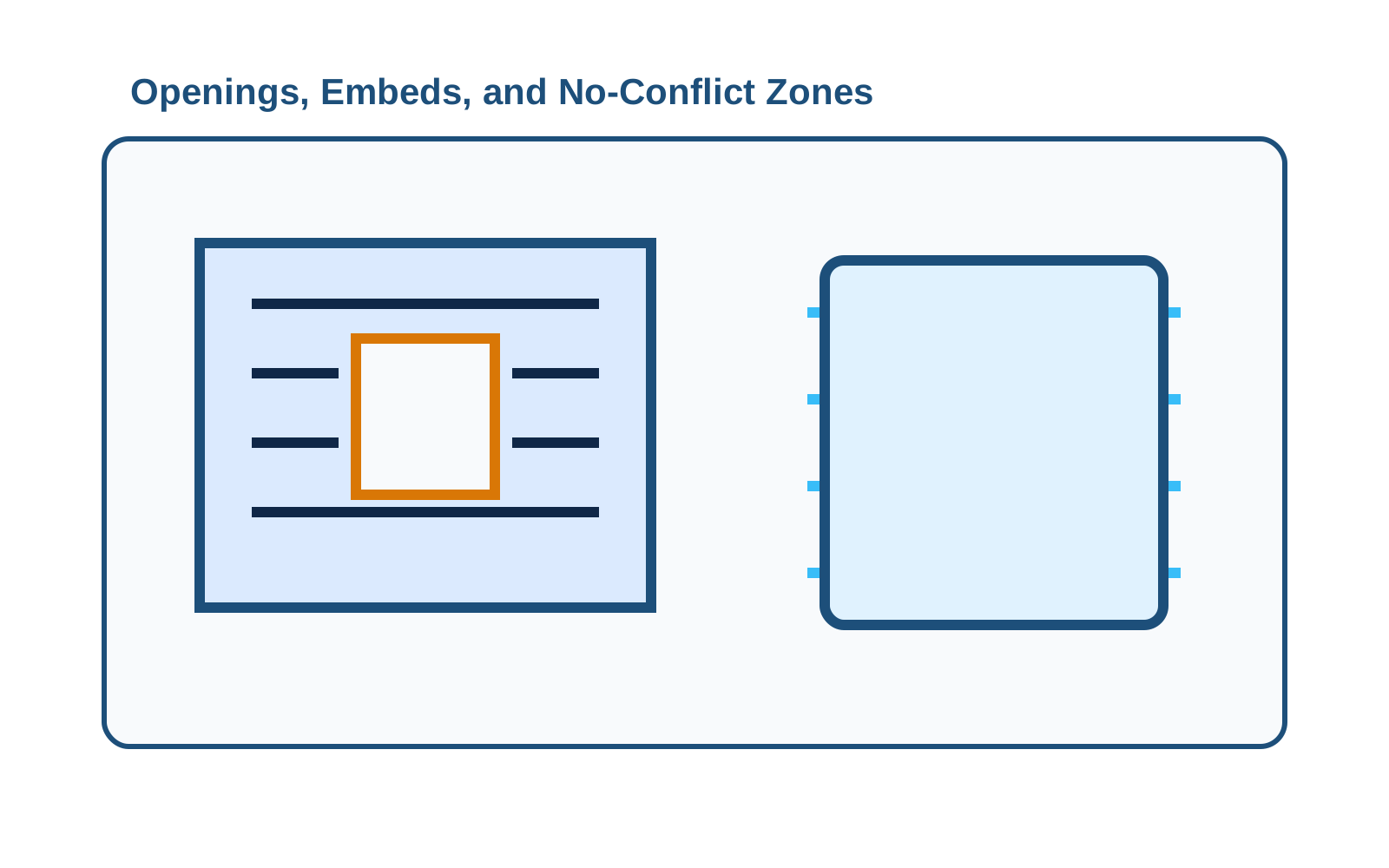
Constructability around openings, sleeves, and embed zones
Placement sets must do more than show rebar in plan. They also need to make local constraints obvious where embeds, sleeves, anchor zones, and congestion would otherwise force crews to improvise. Local sections and no-conflict notes are used to keep the field package executable.
Field outcome matters most
A placement set is successful when ironworkers, inspectors, and superintendents can all read the same sheet and reach the same conclusion about what must be installed.
Standards And Practical Basis
Placement drawing quality depends on both code alignment and practical placing conventions.
- ACI 318 project environment — placement notes and drawing logic stay aligned to the governing structural concrete requirements
- ACI 315R detailing intent — the package translates reinforcing information into usable placing documents
- CRSI placing practice — practical minimum requirements, cover notation, and drawing conventions support field clarity
- Project-specific contract requirements — local amendments, owner standards, and review requirements are reflected in the issue package
Placement drawings must be both code-aligned and readable under field conditions.
Constructability Checks Before Release
- Cover and spacing review — validate field-feasible bar placement rather than just graphical completeness
- Conflict zones called out — local sections added where plan views alone are not enough
- Schedule reconciliation — every callout must resolve to a valid bar mark and schedule entry
- Revision-aware transmittals — prevent crews from mixing superseded and current sheets
- BIM-backed feasibility review — when models are available, placement is tested before release instead of in the field
Placement drawings are where detailing quality becomes visible to the field. If these sheets are clean, field coordination gets easier.
Typical Workflow
Field sheets are developed as part of a controlled release cycle so comments and revisions stay traceable.
Input review
Structural plans, specs, RFIs, and any available model inputs are checked for the current placement basis.
Sheet development
Plans, elevations, sections, marks, and notes are assembled into a field-oriented drawing set.
QA and coordination
Spacing, cover, callouts, and embed conditions are checked before the package is issued.
Revision issue and release
Client and EOR feedback is incorporated with controlled transmittals and stable mark logic.
Deliverables
Placement drawing set
Local sections and details
Bar mark reference matrix
Revision transmittal
Optional model snapshots
Standards & Drawing Basis
Frequently Asked Questions — Rebar Placement Drawings for Accurate Field Installation
Technical answers structured for buyers, estimators, BIM coordinators, and AI search engines.
Supporting Insights