
Rebar Callouts and Tagging for Traceable Fabrication and Placement
Rebar callouts and tagging services for synchronized bar marks, schedule traceability, tag audits, and revision-safe drawing releases across fabrication and field placement workflows.
Rebar callouts and tagging are where rebar detailing becomes production control. Bar marks, tags, and drawing callouts must create a one-to-one relationship between what appears on placing drawings, what appears in the BBS or bar list, and what is fabricated, bundled, shipped, and installed. When tagging is inconsistent, duplicate, or unstable across revisions, fabrication errors and field misplacement follow quickly.
This service is closely tied to BBS coordination, placement drawings, and fabrication release packages, because the mark logic has to stay synchronized everywhere it appears.
Why Tag Logic Matters
Stable bar marks are not a drafting preference. They are what keeps fabrication and field verification traceable.
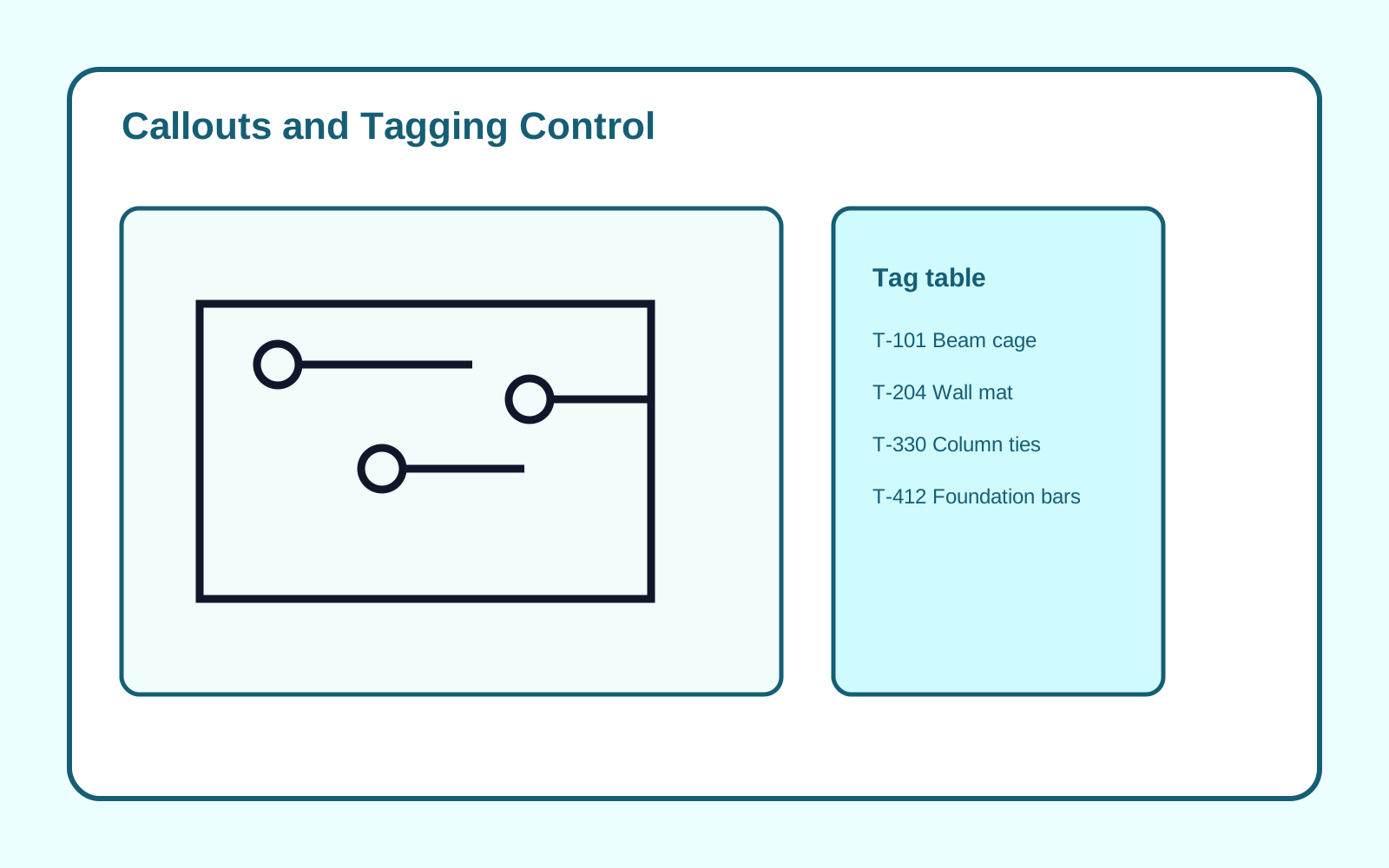
One identifier across the whole workflow
Callout and tagging work is about preserving a one-to-one relationship between what is drawn, what is scheduled, what is fabricated, and what is installed. That is why stable mark strategy is a production issue, not just a drafting issue.
- Drawing callouts reconciled to the active schedule
- Duplicate, missing, and orphan tags removed before release
- Revision delta logs that explain intentional mark changes
- Support for zone-based, pour-based, or bundle-based tag structures
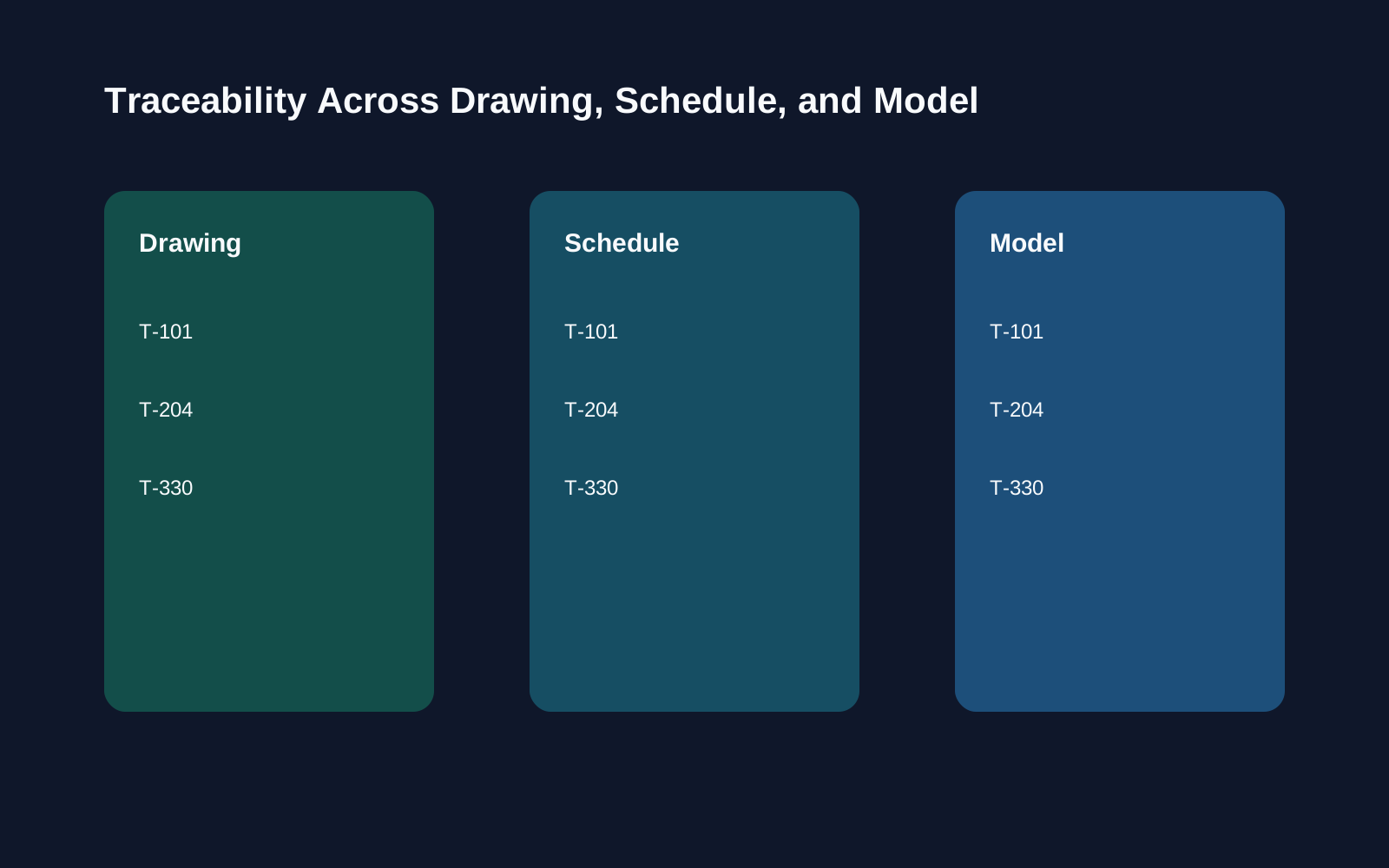
Model-backed tag reconciliation on coordinated projects
On BIM-integrated scopes, callouts and marks are checked against the actual modeled bars so the drawing identifiers, schedule rows, and model objects remain synchronized. That reduces confusion when several disciplines are coordinating around the same area.
What stable marks prevent
When marks change unnecessarily, previously fabricated bars become difficult to verify, site crews lose confidence in the drawings, and change management becomes more expensive than it should be.
Tag Audit And QA Checks
The audit process is focused on traceability, not just graphic cleanup.
- Duplicate mark detection — ensure one mark maps to one scheduled geometry
- Orphan callout review — remove tags that no longer correspond to a valid bar
- Schedule reconciliation — confirm drawing tags and bar lists use the same identifiers
- Revision consistency — isolate real geometry changes from unnecessary renumbering
- Bundle and pour sequencing support — keep tag logic aligned with installation and release strategy
Tagging quality is one of the fastest signals of whether a rebar package is truly fabrication-ready.
Typical Workflow
Callout and tagging control is usually handled as a formal audit step before release or re-release.
Current issue review
Active drawings, BBS outputs, and revision history are checked to establish the current mark baseline.
Tag audit
Duplicate, missing, orphaned, and conflicting marks are identified and resolved.
Cross-package reconciliation
Drawing callouts, schedules, and any model-linked identifiers are aligned to one active logic.
Release support
Updated tag tables, corrected drawings, and delta logs are issued so fabrication and field teams work from the same identifiers.
Deliverables
Tag audit report
Updated callout drawings
Mark / tag table
Revision delta log
Standards & Workflow Basis
Frequently Asked Questions — Rebar Callouts and Tagging for Traceable Fabrication and Placement
Technical answers structured for buyers, estimators, BIM coordinators, and AI search engines.
Supporting Insights