
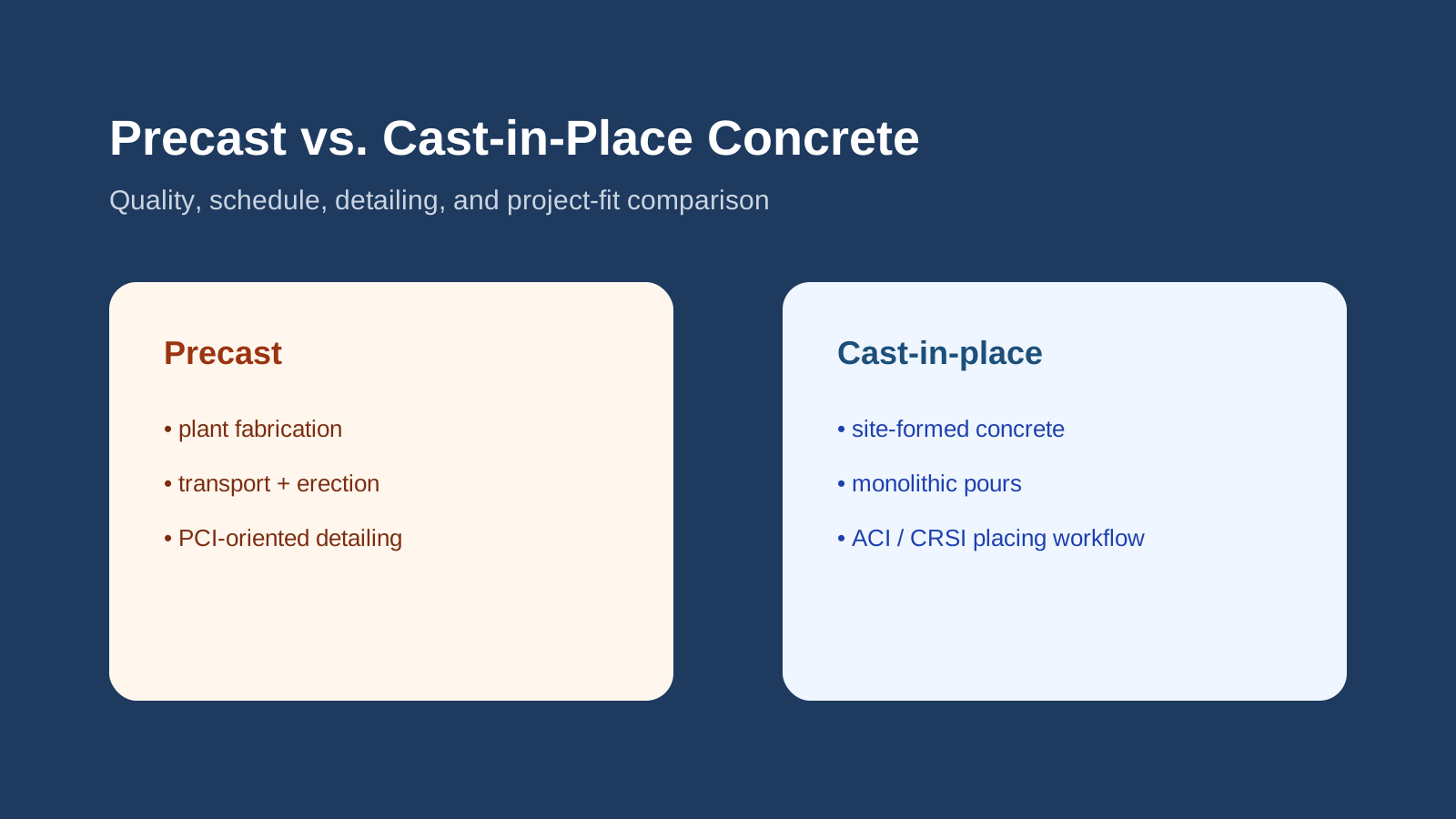
Choosing between precast and cast-in-place (CIP) concrete is one of the most consequential decisions in structural construction. Both methods rely heavily on precise rebar detailing, but each has distinct advantages based on project type, timeline, budget, and site constraints. This guide breaks down the key differences to help engineers and contractors make an informed choice.
Side-by-Side Comparison
| Factor | Precast Concrete | Cast-in-Place |
|---|---|---|
| Quality Control | Factory-made; tightly controlled curing conditions | Site-dependent; weather and workmanship variability |
| Schedule | Panels/elements cast concurrently with site prep | Sequential; formwork, rebar, pour, cure, strip |
| Cost (upfront) | Higher fabrication and transport | Lower unit material cost |
| Cost (long-term) | Less rework, faster cycle time | More RFIs, formwork costs can escalate |
| Complex geometry | Limited by mold constraints | Highly flexible on-site |
| Rebar detailing | Shop drawings + connection details per PCI | Full placement drawings per ACI 318 / CRSI |
| Site congestion | Large crane required for erection | All work done in place; more flexible |
| Seismic performance | Connection detailing critical | Monolithic; generally superior ductility |
When to Choose Precast Concrete
Precast is the preferred method when repeatability, schedule acceleration, and factory quality control matter most. Best-fit applications include:
- • Parking structures and garages with repetitive double-tee or hollow-core floors
- • Precast columns, beams, and wall panels for commercial/industrial buildings
- • Bridge girders and culverts under AASHTO LRFD requirements
- • Projects with tight urban site constraints where on-site formwork is impractical
- • Fast-track schedules where panels can be fabricated off-site during foundation work
When to Choose Cast-in-Place
CIP remains dominant where design flexibility, seismic performance, or complex geometries are required:
- • High-rise RC frames in seismic zones requiring ductile moment-resisting connections
- • Tunnels, retaining walls, and subterranean structures with irregular geometry
- • Transfer slabs, transfer beams, and heavily loaded podium levels
- • Renovations and additions where integration with existing structure is critical
- • Post-tensioned slabs for long-span, flat-plate construction
Rebar Detailing Requirements: Key Differences
Precast Detailing
- → PCI MNL-116 and PCI Design Handbook standards
- → Embedded inserts, lifting loops, and weld plates
- → Connection details at erection joints
- → Grouted sleeve, dry-pack, or welded connections
- → Manufacturing tolerances tighter than site-poured
Cast-in-Place Detailing
- → ACI 318-25, ACI 315, and CRSI Manual
- → Placement drawings by element (slab, beam, column, wall)
- → Bar bending schedules for every pour
- → Congestion checks at joints, corners, and openings
- → ACI 117 tolerances for cover and spacing
Conclusion: Hybrid Solutions Are Often Best
Many modern US projects combine both methods — for example, CIP cores and moment frames with precast floor panels and façade elements. In these hybrid structures, coordination between precast and CIP rebar systems is critical, and a single detailing firm handling both reduces interface errors significantly.
At Precision Rebar Detailing USA, we specialize in both precast panel detailing and full cast-in-place shop drawing packages, ensuring seamless coordination across every structural system on your project.
Need Precast or CIP Detailing?
Our expert team handles both — with free quotations and 48-hour turnarounds.
Request a Free Quote